
How to Check Criminal History in Summit County
No single free county database supplies a complete Summit County criminal history. The practical starting point is Utah Courts Xchange for public cases, followed by the record holder that fits the question. Use the District Court jurisdiction for felonies and class A misdemeanors, the Justice Court jurisdiction for most class B and C misdemeanors, infractions, county ordinances, and traffic matters, or both when the level is unclear.
Gather the exact surname, given name, spelling variants, approximate filing date, and date of birth when it is lawfully available. A case number or citation number helps, but neither is unique statewide. Identity details matter because a matching name alone does not establish that a docket, booking, or supervision entry belongs to the intended person.
- Search Xchange with Summit County scope and select both court levels if the offense class is not known.
- Use the surname, given name, birth date, case type, and date range to narrow the result set.
- Open the case history and compare the court, filing date, party code, and available identity fields.
- Check the county inmate report for current local custody or UDC Offender Search for state custody or supervision.
- Request the incident, booking, audio, or certified court item from the office that actually holds it.
Why Summit County Has No Single Criminal-History Search
A criminal event can create several records that move on different schedules. The arresting agency writes an incident or arrest report. Summit County Jail assigns a booking number and custody entry. A prosecutor decides whether and what to file. Court staff then place the case, events, documents, judgment, and disposition in CORIS, with public material exposed through Xchange. Qualifying fingerprint and disposition data may also reach the Utah Bureau of Criminal Identification.
| Question | Best starting channel | What it cannot prove |
|---|---|---|
| Was a case filed? | Utah Courts Xchange | A docket is not the full police report |
| Is someone in county custody now? | Summit current-inmate PDF | Custody does not prove guilt |
| What did the officer report? | Creating agency under GRAMA | Allegations are not a disposition |
| What does my Utah repository history show? | BCI Right of Access | It does not replace the court file |
| Is someone in state custody or on AP&P? | UDC Offender Search | It excludes county pretrial custody |
The official Xchange gateway shows its guest, payment, and subscriber routes before a user reaches public case data.
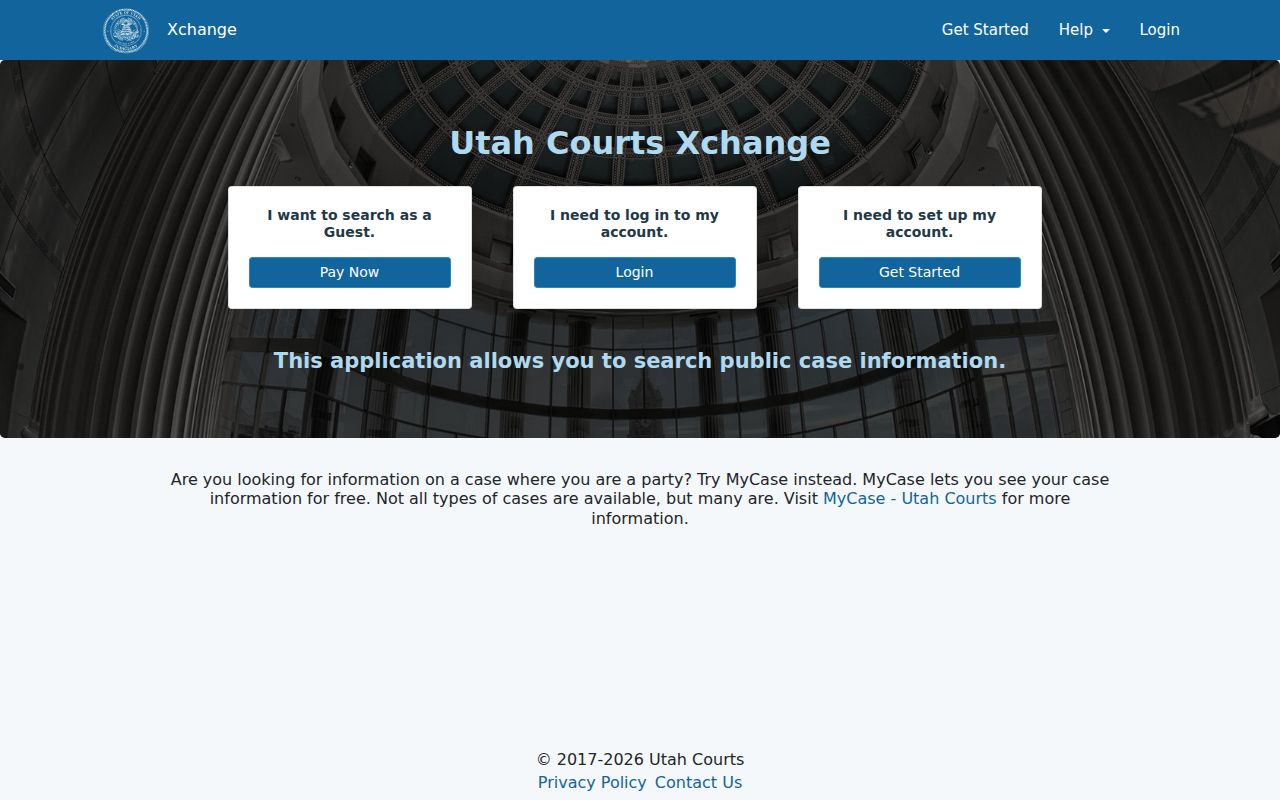
Those separate entrances reinforce an important Summit County point: online court access is public but billable, while a courthouse terminal is the free court-record alternative.
Official Utah Background Checks
The Utah Department of Public Safety, Bureau of Criminal Identification provides the official statewide route for reviewing one's own Utah criminal history. Utah does not offer an unrestricted public name search of another person's full repository record. A BCI Right of Access request is subject-only, requires identity information and the current form's fingerprint submission method, and costs $20 under the fee effective July 1, 2025.
A mailed request calls for an original simultaneous impression of the four right-hand fingers. BCI also provides Livescan, digital-card, and wet-fingerprint services by appointment for ordinary noncriminal applicant purposes. Its Taylorsville office is at 4315 South 2700 West, Suite 1300, and publishes weekday 8 a.m. to 5 p.m. hours. Summit County Sheriff also advertises fingerprint service, but callers should confirm the schedule and present charge with the office before visiting.
The BCI criminal-records page separates own-record access from the limited statutory channels available to authorized entities.
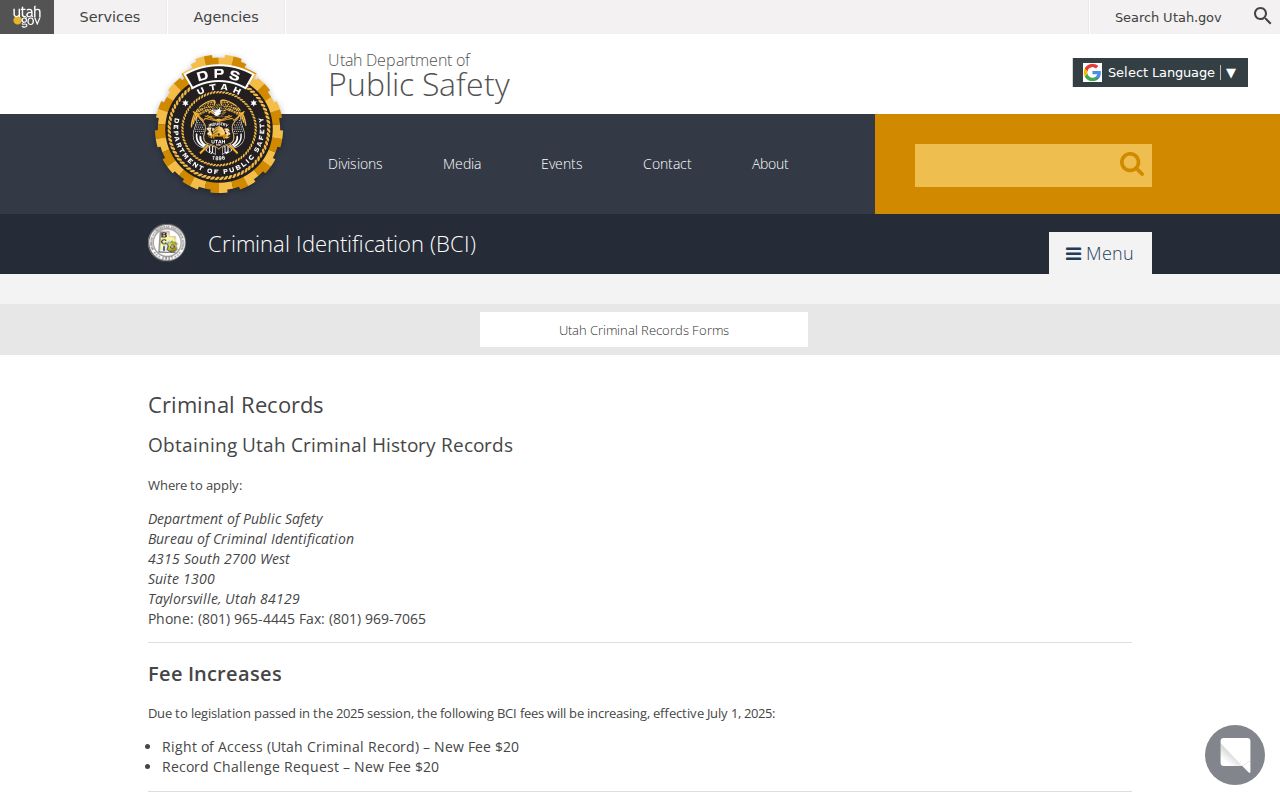
This state product is identity-centered. For the exact Summit County charging language, filings, and disposition, the court docket and clerk remain the better sources.
Searching Summit County in Xchange
Xchange is the public view into Utah Courts' CORIS case-management system. A careful Summit County query chooses District Court, Justice Court, or both and narrows the scope to the county or a particular court. An asterisk can help with name variants, while a date range, case type, or court filter can keep a broad surname from reaching the 500-result maximum.
| Search field | Use in a Summit County search |
|---|---|
| Jurisdiction | District Court, Justice Court, or both |
| Case number | Useful with court scope because it is not unique statewide |
| Last and first name | Primary public party search, with careful spelling |
| Case type | Narrows to the relevant criminal category |
| Search scope | Statewide, Summit County, or a named court |
| Birth date | Helps distinguish criminal defendants when available |
| Citation number | Must be paired with a location or court |
| Date range | Limits filing or judgment results |
Guest access begins with $10 credit under the current published schedule. Searches cost $0.35, public district document images cost $1, and unused guest credit is forfeited. Subscription access has a setup and monthly charge, so occasional users may prefer the guest route or a free public terminal. Recheck the Utah Courts fee page before paying because older wording has remained visible in parts of the registration flow.
Types of Criminal Records in Summit County
Each Summit County criminal record answers a different question and stays with a different custodian. Treating an arrest report, booking row, docket, and BCI rap sheet as interchangeable can produce a false timeline or miss the final case result.
- Incident and arrest reports: The Sheriff, Park City Police, Kamas Police, Utah Highway Patrol, or another creating agency keeps the officer narrative and related media.
- Booking records: Summit County Jail records intake, booking identity, housing, and custody activity; its public PDF exposes only a narrow set of fields.
- Court files: The clerk maintains filed charges, hearings, motions, minute entries, judgments, and dispositions shown publicly through Xchange when classified as public.
- Repository and supervision records: BCI maintains fingerprint-associated Utah cycles, while UDC holds state custody and AP&P status.
- Warrants and registry listings: Courts issue warrants, and DPS/BCI publishes statutory registry information under separate access and misuse rules.
Juvenile, sealed, expunged, protected investigative, victim, medical, security, and personal-identifying material can be restricted or redacted. A missing public entry can reflect classification or timing rather than proof that no government record exists.
Sheriff Records When a Portal Has No Answer
Summit County Sheriff Administration is the main fallback for sheriff-created reports, jail material, dispatch records, and releasable media that do not appear in a public database. The official divisions page identifies Adrianne Steed for records requests at 435-615-3599 and asteed@summitcountyutah.gov. Administration serves callers and walk-ins on weekdays from 8 a.m. to 5 p.m. at 6138 Paintbrush Road, Park City.
A useful GRAMA request names the incident or case number when known, approximate date and time, location, involved person, exact item, and preferred format. Broad demands for every record can slow identification and raise search or redaction costs. Park City Police uses its own process and requires its police-related GRAMA form to be notarized, so a city report should not automatically be sent to the Sheriff.
Summit Sheriff Records
Adrianne Steed
435-615-3599
asteed@summitcountyutah.gov
Summit Justice Court
6300 Justice Center Road
Park City, UT 84098
435-615-3800
Summit County Jail
Current local custody and booking
435-615-3723
The Sheriff's official divisions page places records, jail-visiting, and county probation contacts in one agency directory.
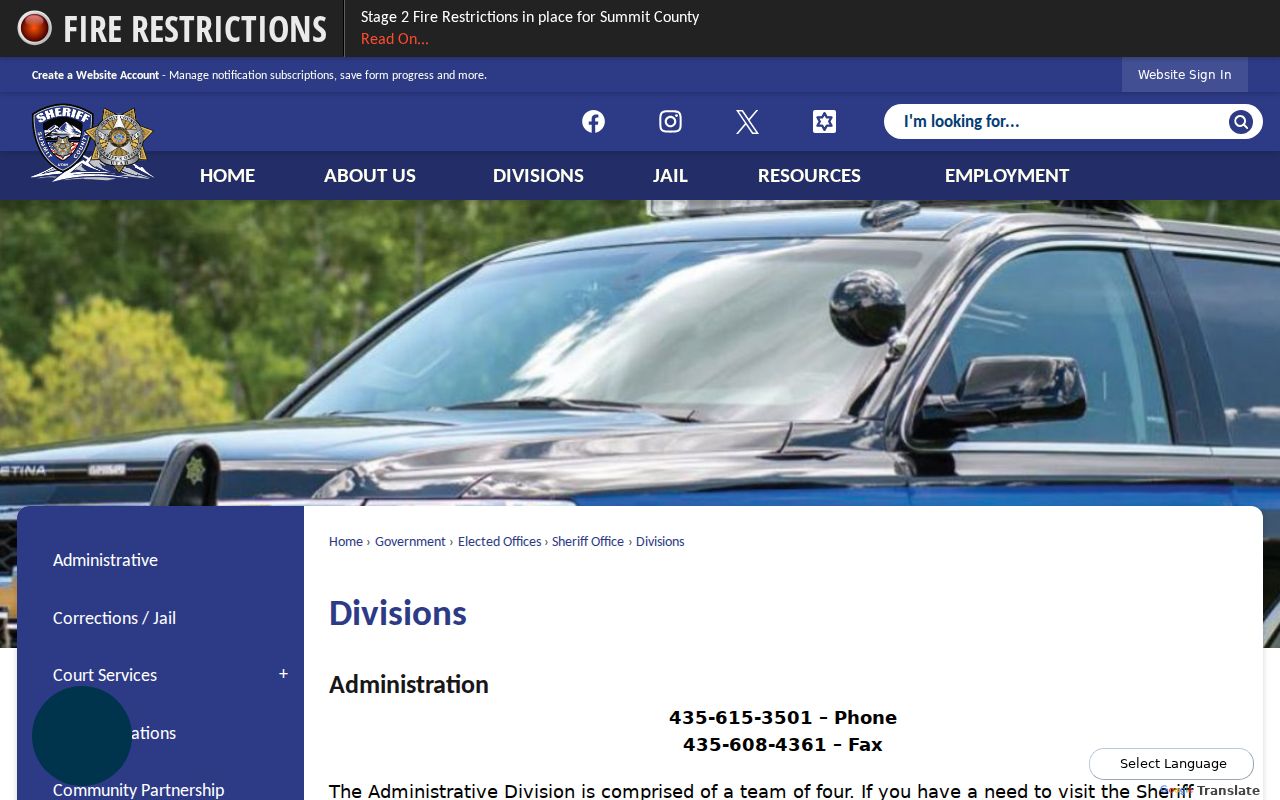
The named contacts help route a request to the unit that holds the material instead of treating the Justice Center as one undivided records counter.
What a Summit County Criminal Record Shows
The contents depend on the system. A repository history groups fingerprint-linked identity and arrest cycles. A court file centers on one case. A booking record centers on custody. Read the field labels before drawing a conclusion, and confirm the disposition rather than assuming the first charge stayed unchanged.
| Name & Identifiers | Names, aliases, date of birth, party codes, and state or federal identifiers where the record lawfully includes them. |
|---|---|
| Arrest / Booking Data | Arrest date and agency in repository records; booking number, intake time, and housing location in the county custody record. |
| Charges & Statutes | Alleged arrest charges, prosecutor-filed counts, case type, and statute references can differ as the matter develops. |
| Disposition | Dismissal, acquittal, plea, conviction, or another case outcome entered by the court. |
| Sentence | Public judgment terms, fines, restitution, and supervision entries when included in the court file. |
| Custody / Supervision Status | County custody comes from the jail; state prison, probation, or parole status comes from UDC and AP&P. |
Record flow: arresting agency › Summit County Jail › prosecutor and court › BCI disposition matching › UDC when state custody or supervision begins.
Summit County Jail or UDC
The Summit County Jail is a single 100-inmate facility in the Justice Center complex. It holds pre-sentenced arrestees, convicted misdemeanor offenders, and some contracted state prisoners. Its official current-inmate report is a generated PDF, not a searchable profile portal. The report shows name, booking number, location, time incarcerated, and a total housed count. It does not show a mugshot, charge, bond, arresting agency, court date, or release date.
Use UDC Offender Search after state commitment or while a person is under Adult Probation and Parole supervision. Name mode requires at least one letter in both the first and last name, while offender-number mode searches a known UDC identifier. The system may disclose legal status, housing, offense and sentence information, Board dates, and release or termination data. A person awaiting trial in Summit County Jail will not appear there solely because of county custody.
The UDC Offender Search page presents the name and offender-number modes used for the state layer.
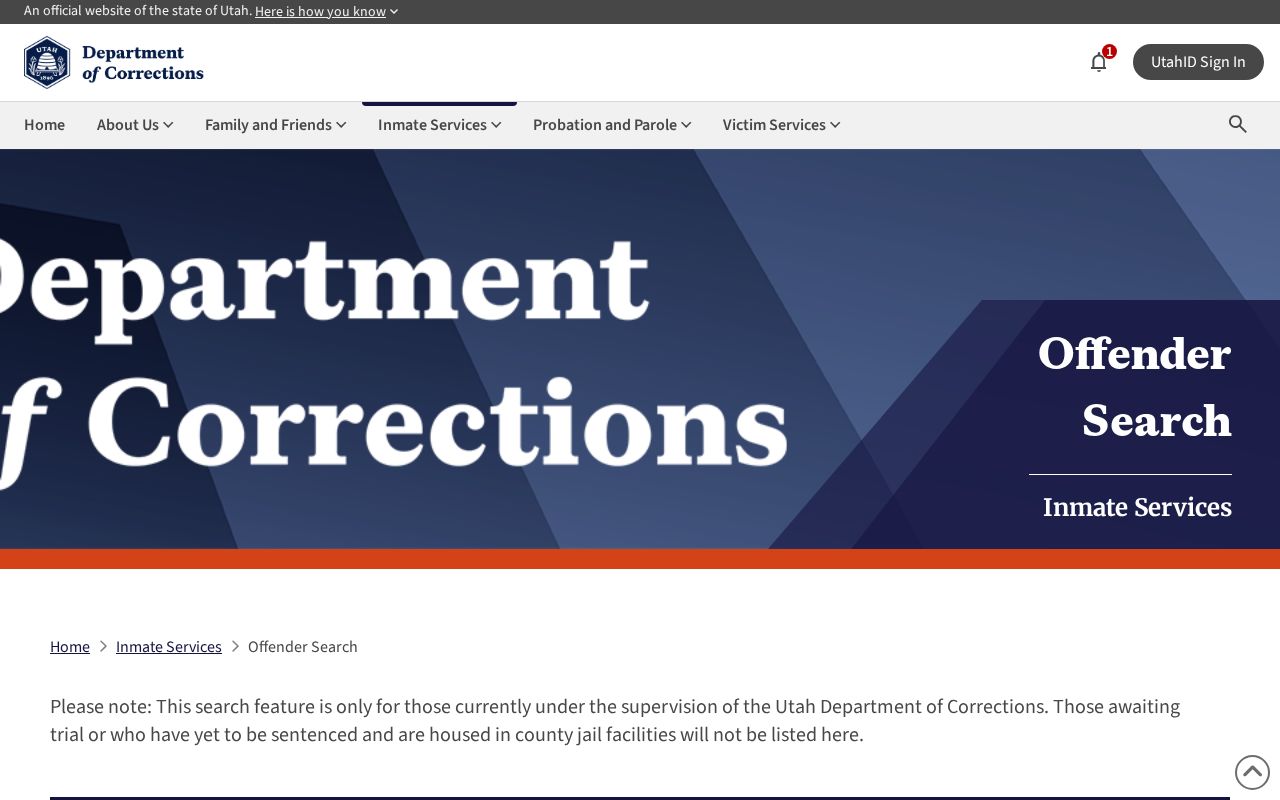
Search both systems only when the custody stage is uncertain, and do not read disappearance from the county PDF as proof that charges were dismissed.
Public Access Laws for Summit County Criminal Records
Utah's Government Records Access and Management Act creates a right to inspect public records while preserving private, controlled, and protected classifications. The custodian decides what can be released and may redact investigative, juvenile, victim, medical, security, or identifying details. Utah's BCI law separately limits dissemination of the central criminal-history repository, which is why a public court docket does not create a public statewide rap-sheet search.
Key Utah laws:
Utah Code § 63G-2-201 establishes the public right to inspect records and its limits.
Utah Code § 63G-2-204 sets request procedures and the ordinary and expedited response framework.
Utah Code § 53-10-108 governs BCI collection, subject access, and dissemination.
Utah court rule 4-202.02 governs classification and access for court records.
Utah Code Title 77, Chapter 40a controls petition and automatic expungement.
An ordinary GRAMA response generally has a ten-business-day framework. Expedited requests generally use five business days and require a public-benefit basis, not personal urgency alone. A denial should state the classification and appeal rights.
Bench Warrants at Summit Justice Court
Summit County does not present warrant guidance as a permanent public master list. The Justice Court tells readers to call because status can change daily or hourly. Its warrant line is the regular court number, 435-615-3800, on weekdays from 8 a.m. to 5 p.m. Xchange can reveal the underlying public case, but the issuing court is the better source for current status and the required next step.
A traffic citation is a promise to appear, and the local court states that appearance is due within fourteen days. Failure to appear may result in a bench warrant and another charge. The court describes self-reporting, cash bail, and bond routes, but bail is release security rather than a fine. A warrant is not recalled until the required security is posted. Sealed warrants and juvenile matters will not appear in public systems.
Someone booked on a Summit Justice Court warrant may wait for the next available court date. The court says in-custody matters are taken in first-booked, first-seen order and warns that the wait may reach ten days unless bail is posted. Calling the court first helps identify the issuing case and avoids relying on an old list.
Sealed, Expunged, and Restricted Records
Xchange omits sealed, expunged, and juvenile delinquency cases. In Utah, expungement removes a record from public inspection by sealing or restricting access; it does not mean that every government copy is destroyed. Courts can reopen certain expunged files for defined judicial purposes, and BCI keeps a protected index. A public search result that disappears is therefore not the same as proof that no protected record remains.
Petition eligibility depends on the offense, completed payment obligations, waiting time, supervision status, pending proceedings, and other statutory exclusions. Current principal waits include seven years for a felony, five years for felony drug possession or a class A misdemeanor, four years for a class B misdemeanor, and three years for a class C misdemeanor or infraction, with a ten-year period for a specified impaired-driving misdemeanor. Capital, first-degree, violent, and registry-required offenses are generally excluded.
BCI currently lists $65 for a certificate application and $65 per eligible case or certificate. The certificate generally must be filed within 180 days. Utah Courts lists a $150 district-court petition fee effective May 6, 2026, with a fee-waiver path. Court level and current fees should be checked on the filing date, especially for a justice-court matter.
Clean Slate Resumed in 2026
Utah's automatic-expungement operation resumed January 1, 2026. The statute sets processing goals that include 60 days after a qualifying acquittal and 180 days after a qualifying dismissal with prejudice, while qualifying clean-slate cases move after their statutory conditions are met. Because court and repository systems have different jobs, a person should verify both Xchange visibility and their own BCI record after expected relief.
If a qualifying case still appears, identify the exact Summit County court and case number, compare the disposition and completion dates, and use Utah Courts' expungement resources to determine whether the issue is timing, eligibility, or a reporting mismatch. A missing disposition on a personal BCI history may require BCI's formal record challenge rather than a new GRAMA request to the Sheriff.
The Utah state library's Summit County profile supplies the county's historical and geographic setting for this distributed record system.
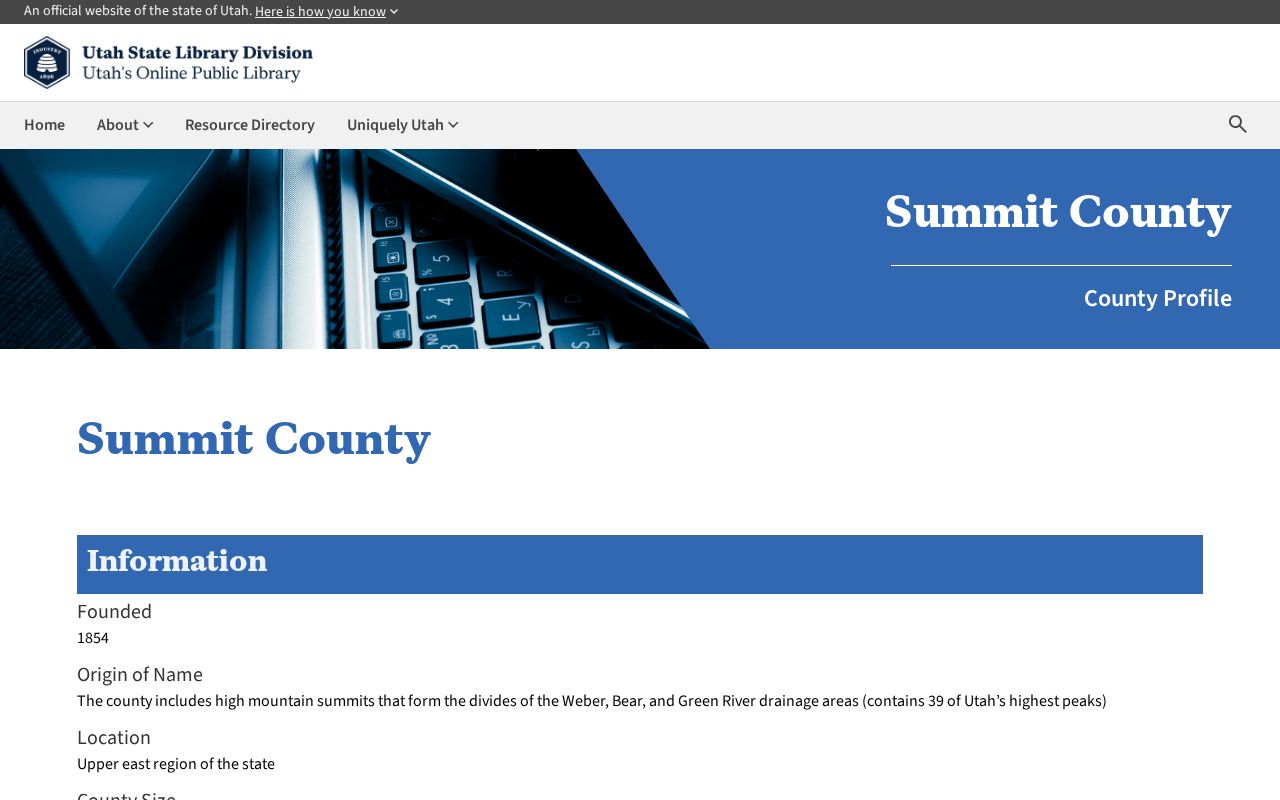
The county's large mountain area, separate city police agencies, and central Justice Center help explain why record verification often involves more than one office.
Summit County Record Access Costs
Fees belong to the product, not to a generic Summit County criminal history search. Confirm the live agency schedule before authorizing a large order because official interfaces can retain older amounts, and redaction or media work may change the estimate.
| Product | Published amount or access route |
|---|---|
| BCI Right of Access | $20, subject-only statewide history |
| BCI record challenge | $20 under the fee effective July 1, 2025 |
| BCI fingerprint service | $20, appointment-based for ordinary public service |
| Xchange guest search | $0.35 per search after a $10 starting credit |
| Xchange public district document | $1 per available image |
| Courthouse public terminal | Free Xchange access at most district courthouses |
| County video recording | $20 per recording in the indexed county schedule |
Sheriff incident reports and other GRAMA copies appear separately in the county schedule. Ask for an estimate before extensive search, retrieval, or redaction begins. An FBI Identity History Summary is a different subject-only nationwide product and does not replace a Summit County docket inspection.
Criminal Records by City in Summit County
The official 2024 Utah municipal series ranks Park City, Kamas, and Francis as Summit County's three largest incorporated cities. Their record paths are distinct. Park City Police has a separate notarized GRAMA form, Kamas has its own police department but no verified public arrest portal, and Francis relies on the Summit County Sheriff as its practical law-enforcement records custodian.
Park City Criminal History
8,254 · Separate Park City Police records and CrashDocs channels
Kamas Criminal History
2,145 · Kamas Police reports with county jail and court handoffs
Francis Criminal History
1,809 · Sheriff-led reports, bookings, and county court routing
Municipal population does not identify the arresting agency or the court. Park City incidents may involve UHP or the Sheriff depending on the road and jurisdiction, and every city booking ultimately uses the county jail. Start with the agency name on the citation, incident number, or booking material.